← all projects

QuickFleet

Co-founder & CTOPre-launch2026 · Logistics, Electric mobility

I co-founded QuickFleet and lead product and technology. It’s an electric delivery network for Nigerian cities, designed around three promises informal dispatch can’t make: a fixed price, a known rider, and proof at the door. I designed the customer app, and designed and built the website.

Role
Co-founder & CTO
Timeline
2026, pre-launch
Team
3 co-founders: CEO, COO and me
Shipped
Website live, customer app designed
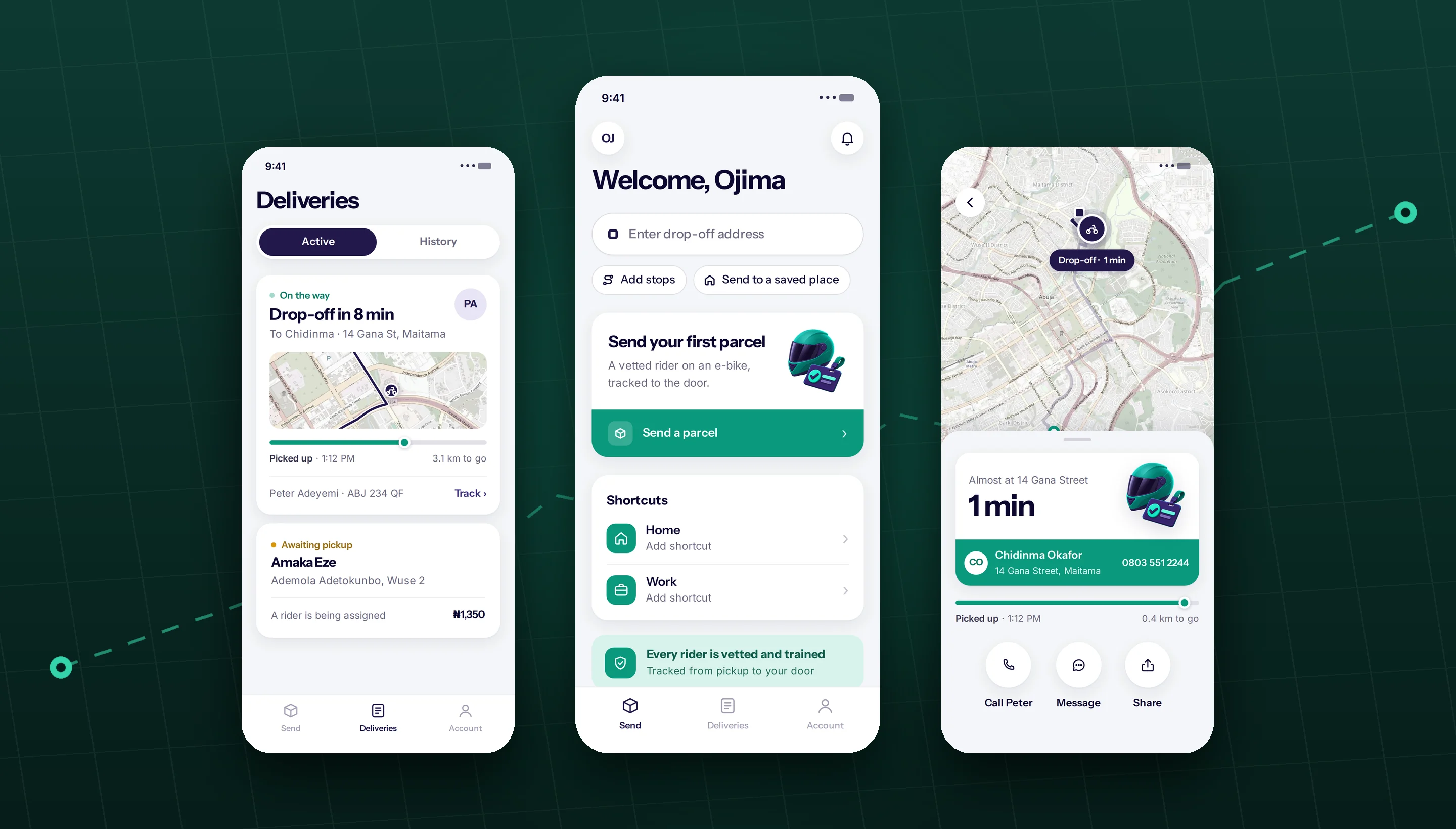
QuickFleet customer app: rider assigned, deliveries, home, live tracking and the delivered record

Part one

The company and the product

Why QuickFleet exists, what I own, and the product I designed.

Overview

Delivery priced by the pump and proven by nothing

Since Nigeria’s fuel subsidy ended in May 2023, petrol has gone from ₦238 to about ₦1,390 a litre, and delivery fees moved with it. Most deliveries still run on informal dispatch: a price agreed on the phone, a rider nobody vetted, and no record once the parcel leaves.

QuickFleet replaces that with electric motorcycles, battery-swap hubs placed where orders come from, and one platform that takes a parcel from booking to a confirmed handover. Abuja first.

No one accountable from pickup to drop-off
01

Agree a price

Quoted by phone and pegged to that day’s pump price.

₦238→₦1,390petrol per litre since 2023
02

Wait for a rider

Whoever is free, with no vetting or training.

No accountability
03

In transit

No tracking, no updates, and detours are common.

No visibility
04

Handover

Released to whoever answers the door.

No identity check
05

Dispute

“It never came,” and nothing to settle it.

No proof of delivery
₦238→₦1,390petrol per litre since 2023
No accountability
No visibility
No identity check
No proof of delivery

My role

Product and technology, end to end

As CTO I own what the platform does, not only how it looks. Most of the important design decisions here were business decisions first.

Product

Defined the system

Booking, pricing, dispatch, tracking and proof of delivery designed as one flow, not five features.

Design & build

App and website

Designed the customer app. Designed and built quickfleet.co.

Partnerships

The energy model

Proposed the battery-swap partnership that makes a fixed price sustainable.

Constraints

Real-world conditions

No outside funding yet, riders on low-end Android phones, and patchy mobile data across the city.

The system

Designing the delivery before designing the screens

Before any screen, I mapped who does what at every step of a delivery, across five parties, and where the product has to carry trust that informal dispatch never could. Every screen in the app answers a cell in this map.

01Book
02Assign
03Pick up
04In transit
05Hand over
06After
SenderQuickFleet app
Enters addresses, sees a fixed price before booking
Sees the rider’s name and photo
Hands over the parcel
Watches it on a live map
Gets a timestamped delivery record
ReceiverNo app, just a text link
Gets a tracking link by SMS
Follows the same live map
Reads a four-digit code to the rider
Confirmation on the same page
RiderVetted, trained, employed
Assigned to the job
Collects the parcel
Rides the route
Takes the code from the receiver
OperationsThe team
Assigns a vetted, trained rider
EnergyBattery-swap hubs
Electric bikes, with swap hubs placed where orders come from
Informal dispatchWhat breaks today
The price moves with the pump
Whoever is free turns up
No record of who took it
Silence until it arrives
Released to whoever answers
“It never came,” and nothing to settle it
In the productWhere trust is carriedPhysical operationWhat it replaces

The trust cells are the product’s real job: a price that can’t move, a rider with a name, a handover that leaves proof. The physical layer is why the price can be fixed at all.

What I designed

Every screen answers one of those three failures

The customer app covers booking, tracking, payment and proof. The receiver never needs it: they confirm from a text link.

Booking

Four screens
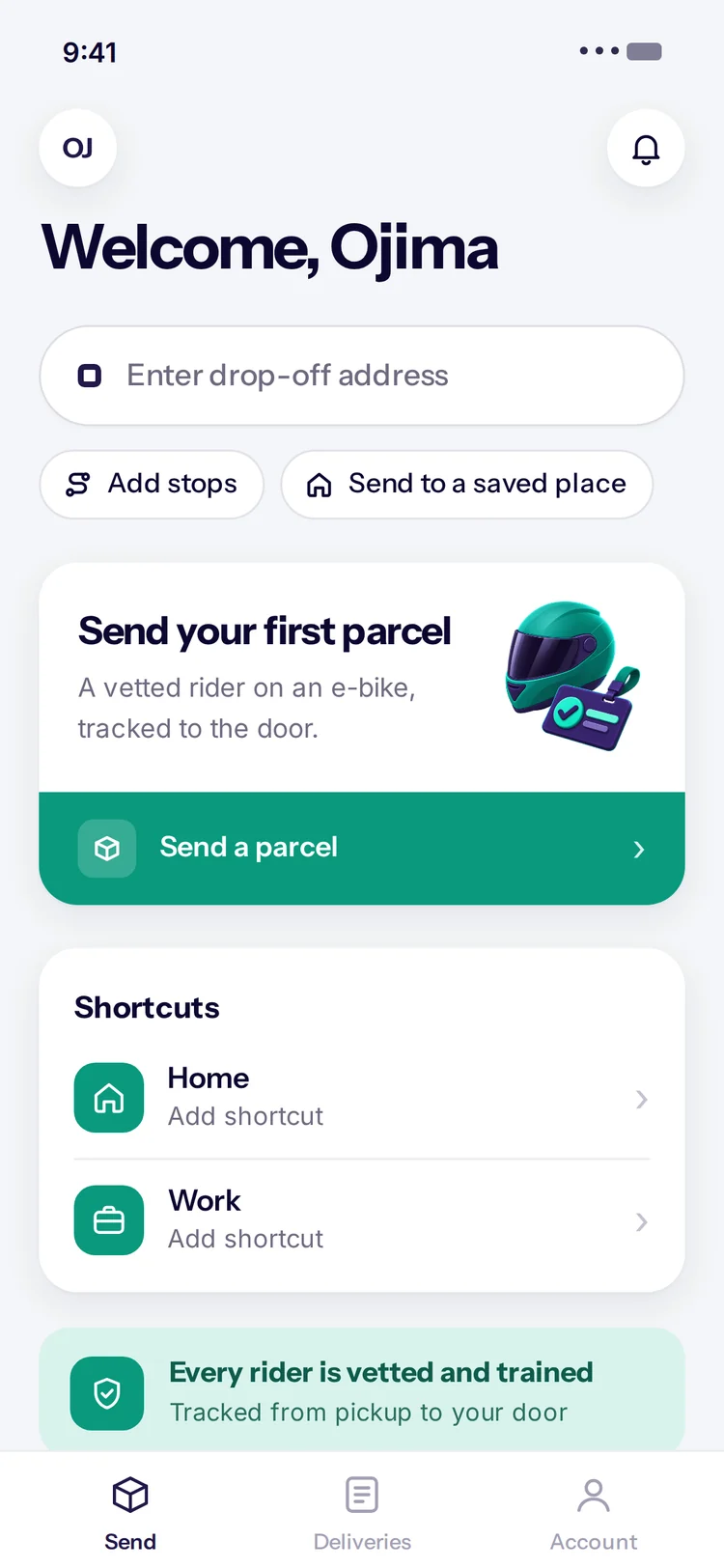
Home screen
01Home

One clear action on first run: send a parcel.

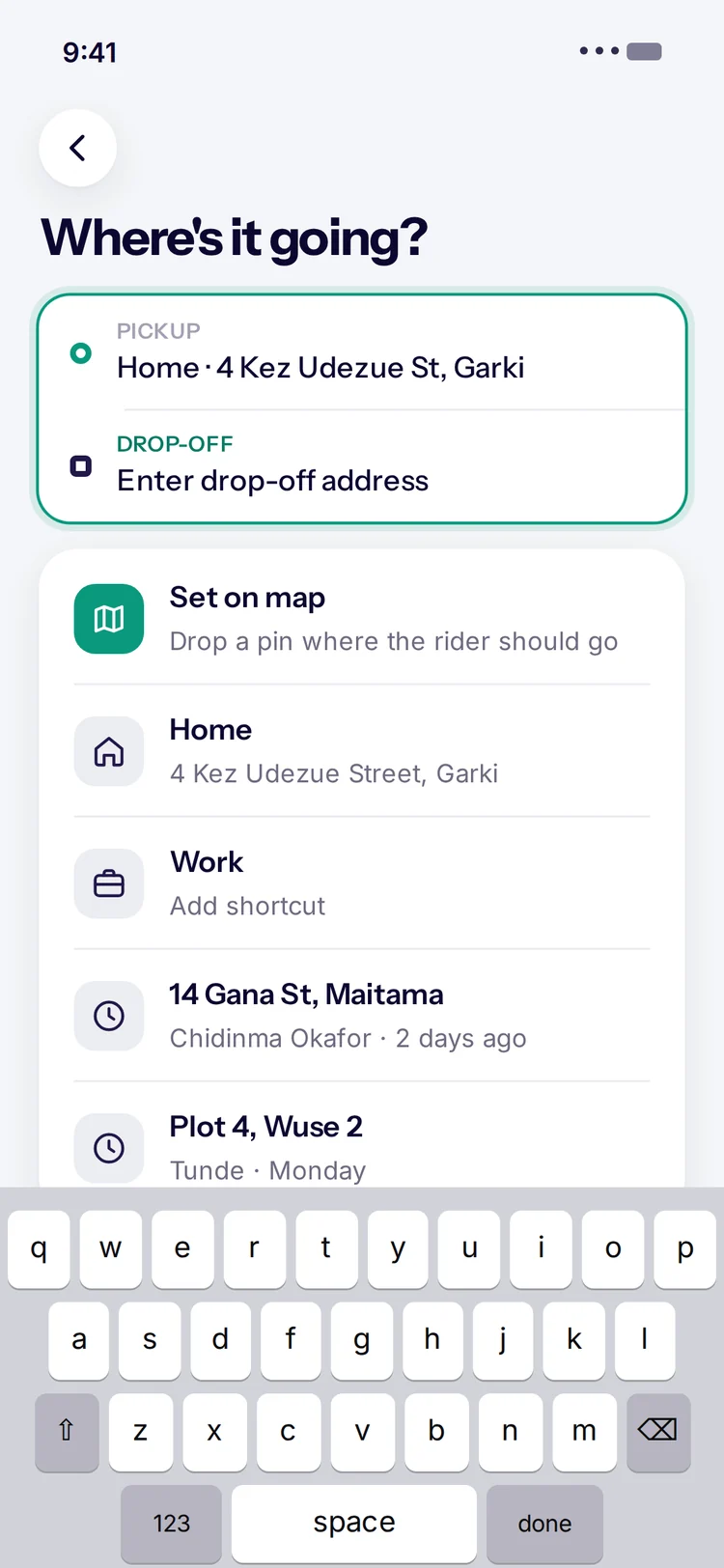
Where to screen
02Where to

Saved places and recent addresses before any typing.

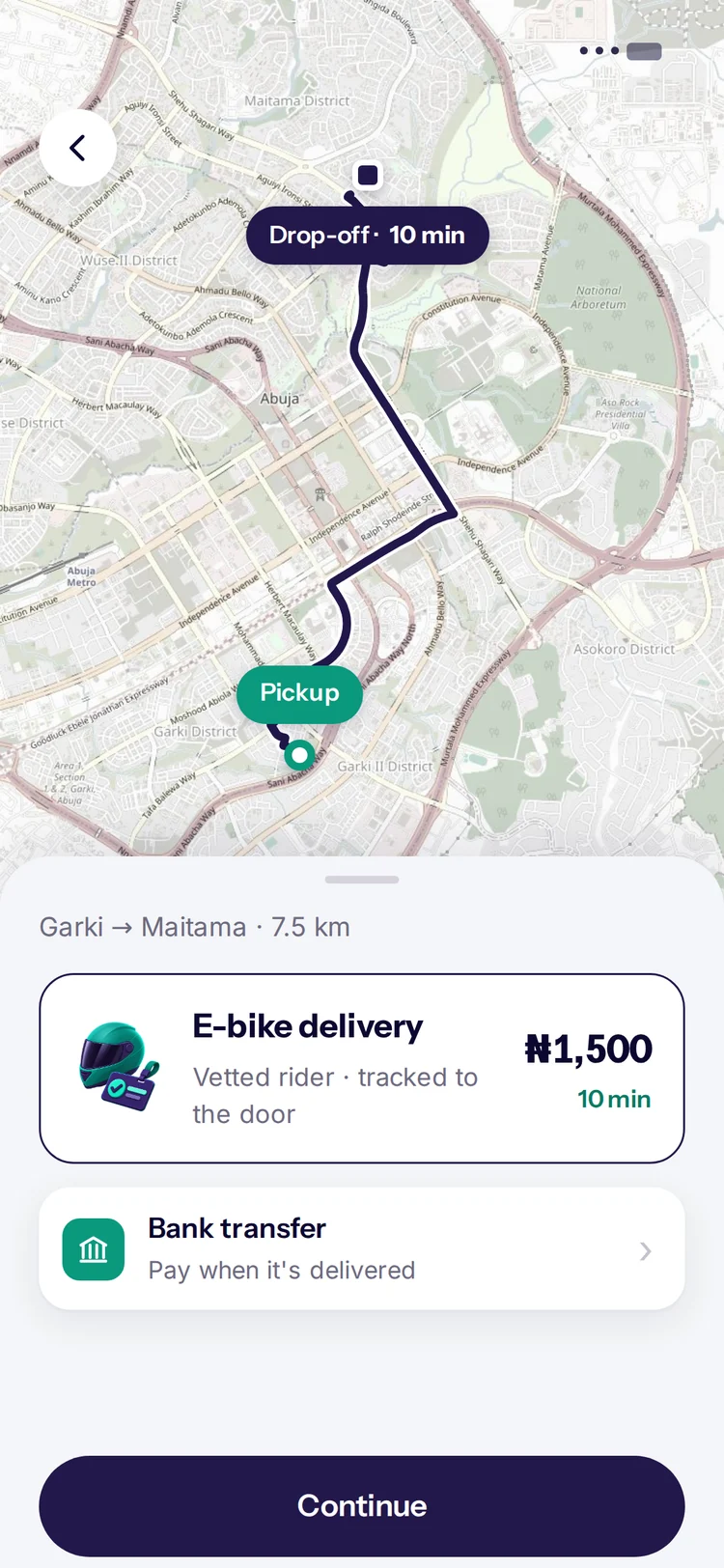
Price and route screen
03Price and route

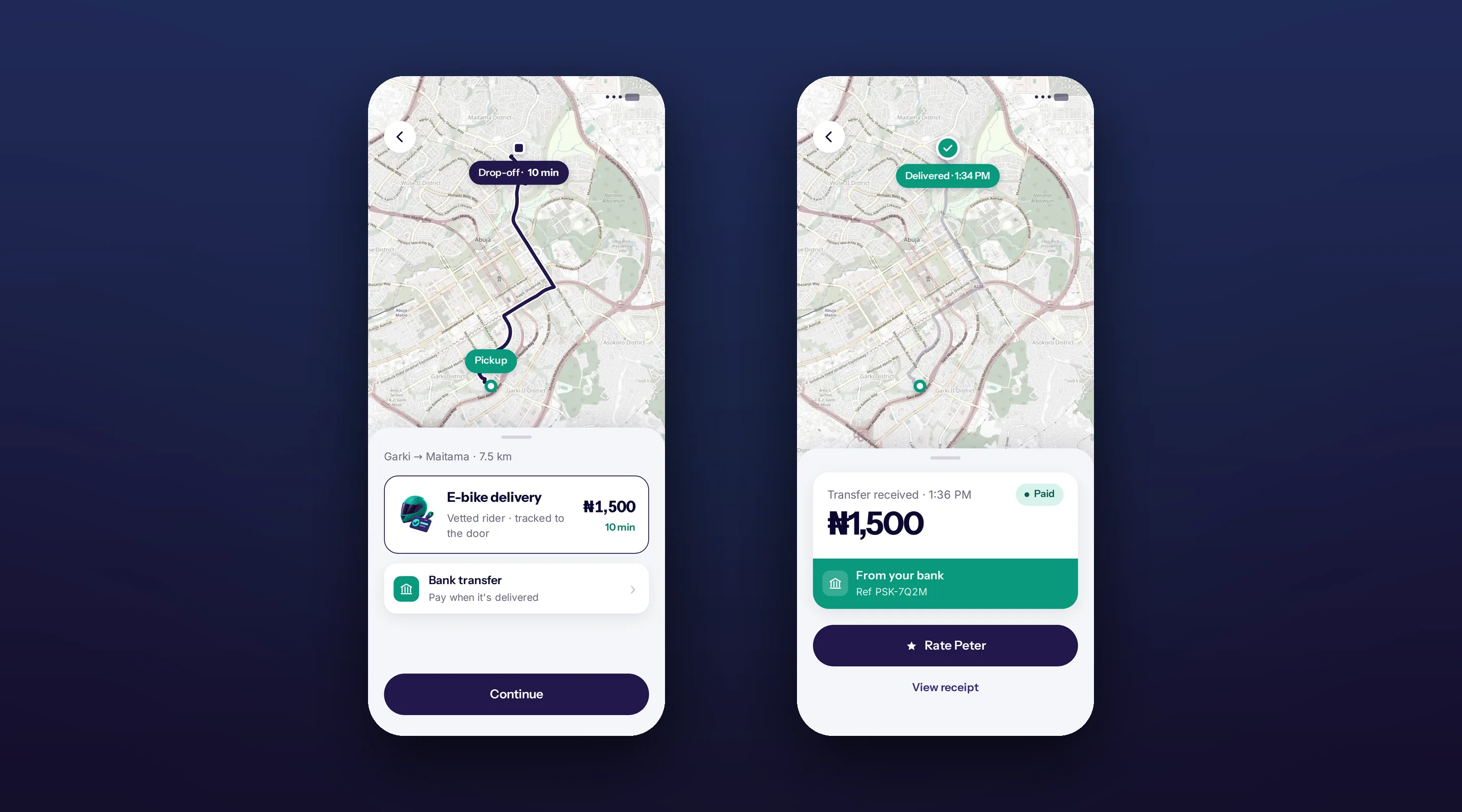
The fixed price is shown before anything is booked.

Price locked before pickup
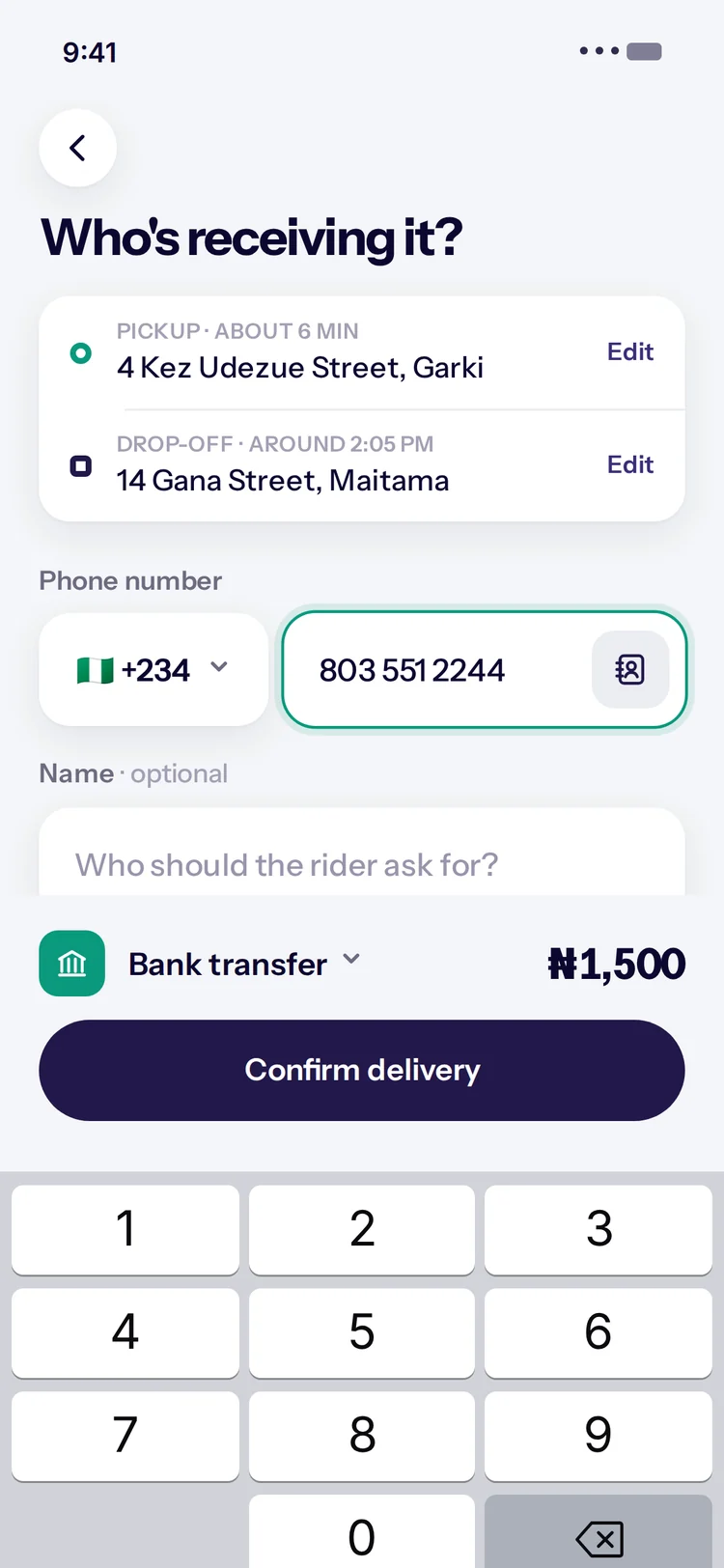
Who receives it screen
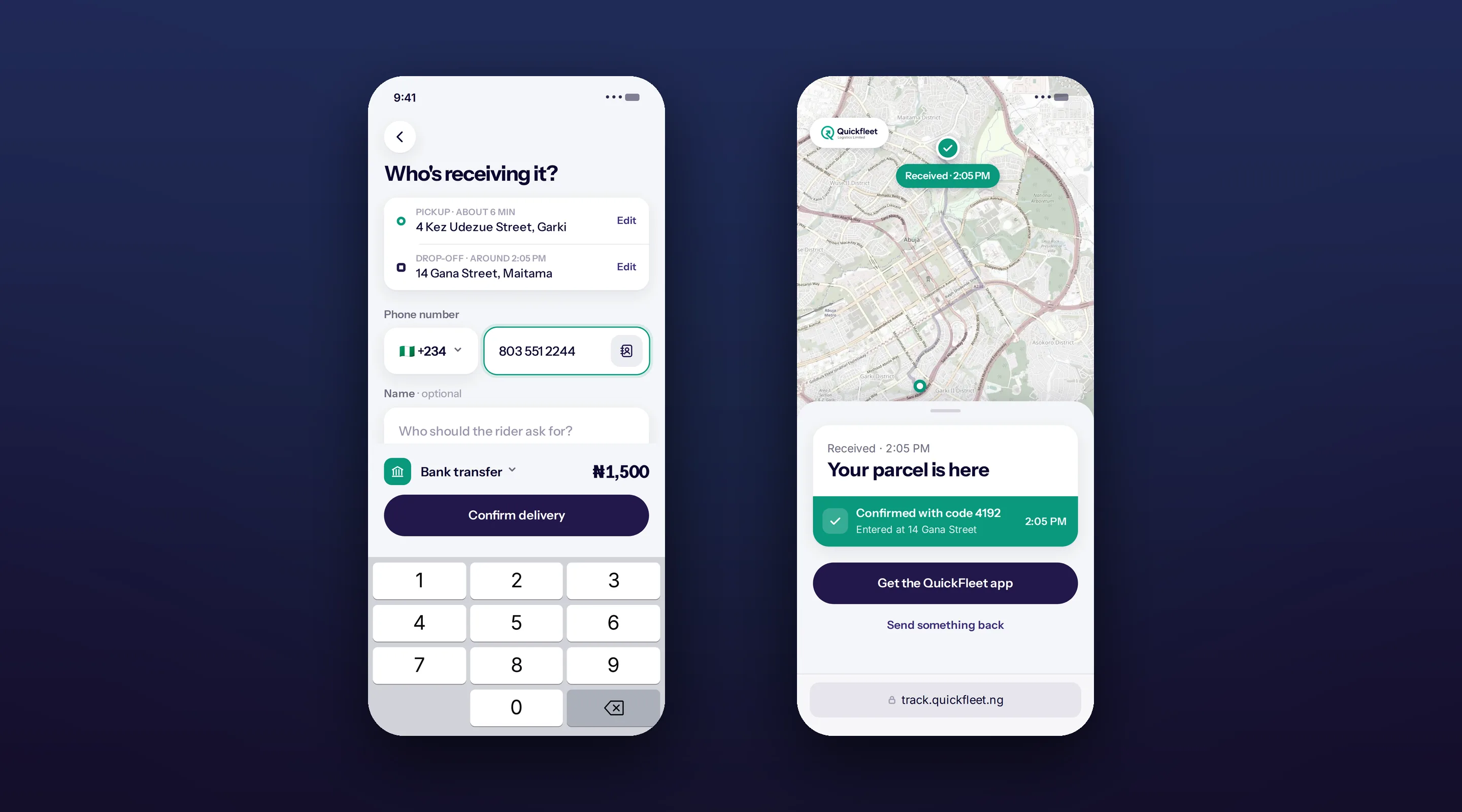
04Who receives it

Only the receiver’s number. They never need the app.

Delivery and proof

Four screens
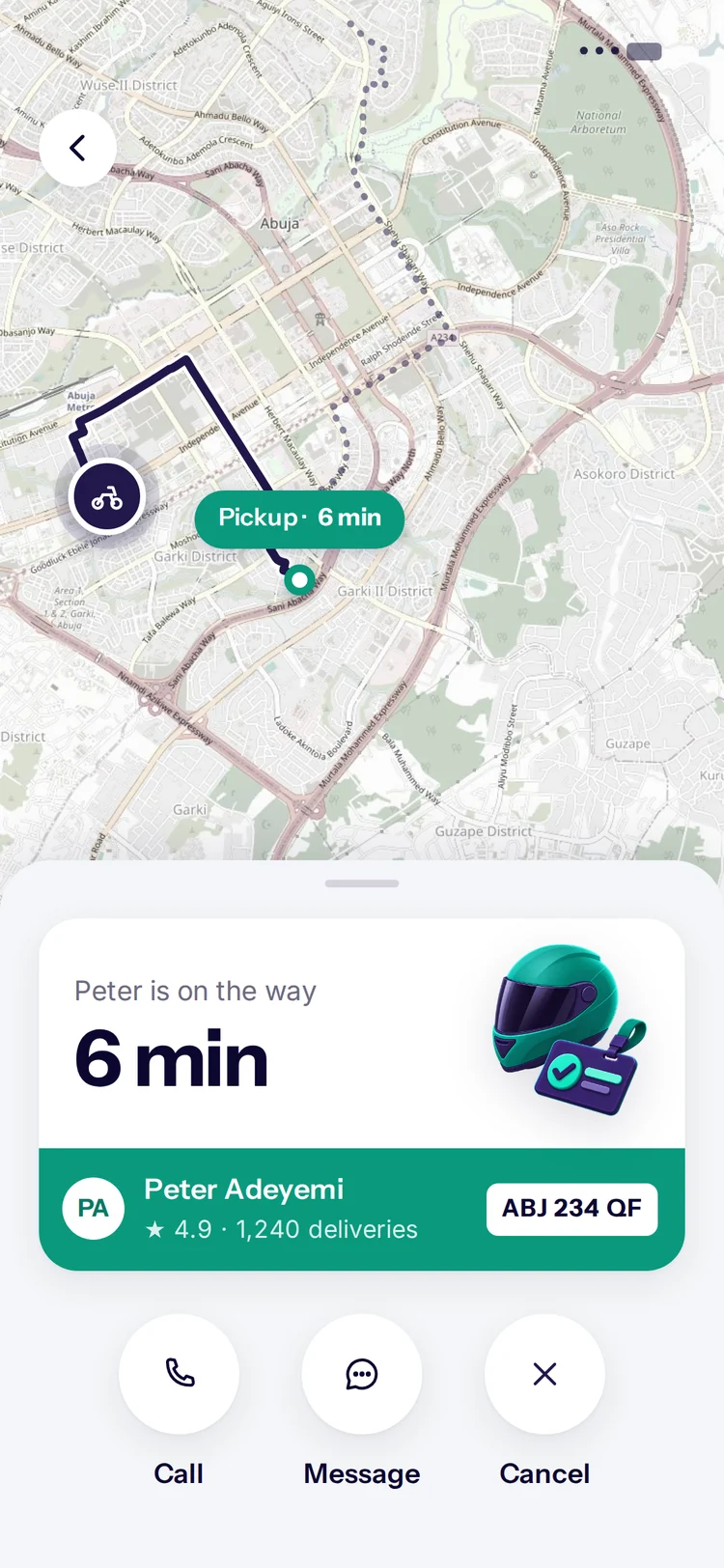
Rider assigned screen
05Rider assigned

A named, vetted rider with a photo before pickup.

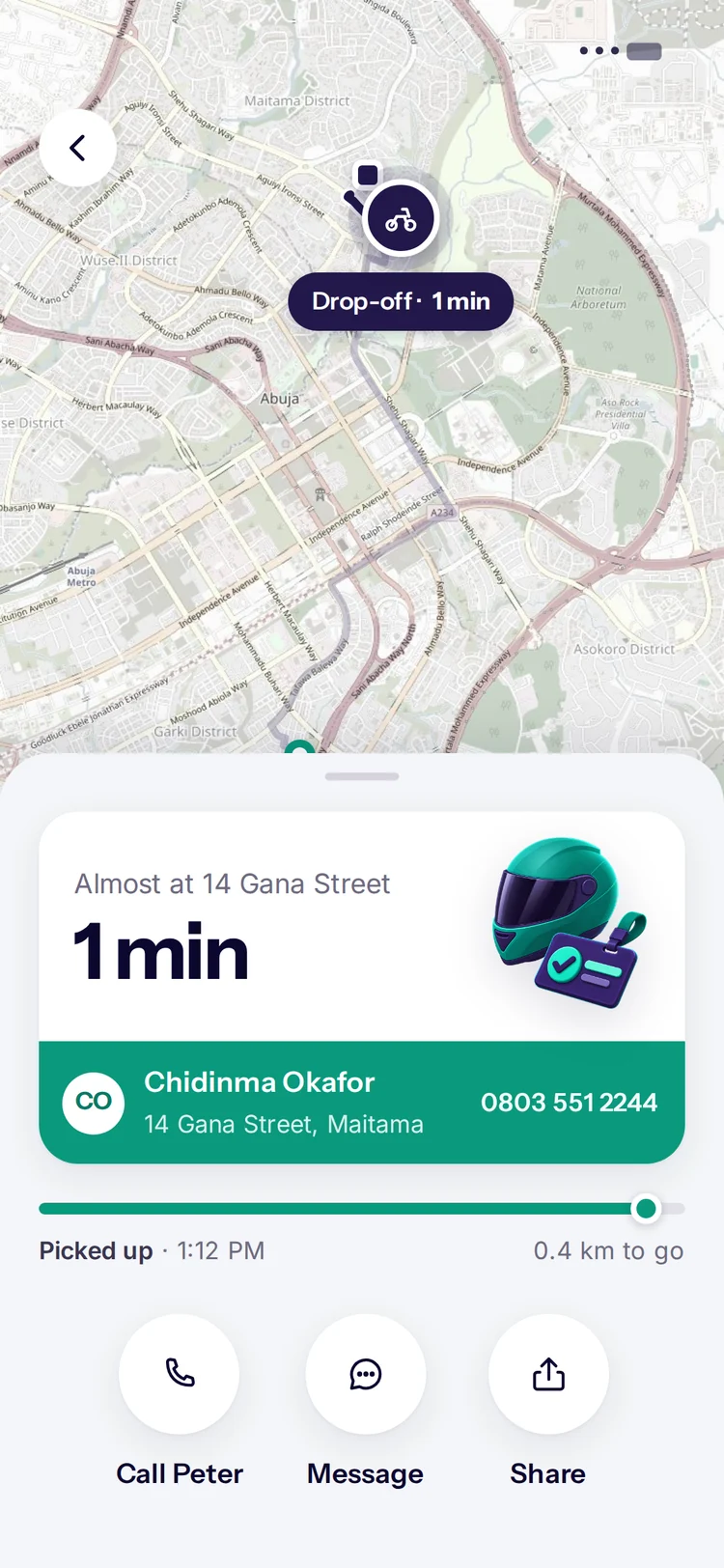
Live tracking screen
06Live tracking

The same live view for sender and receiver.

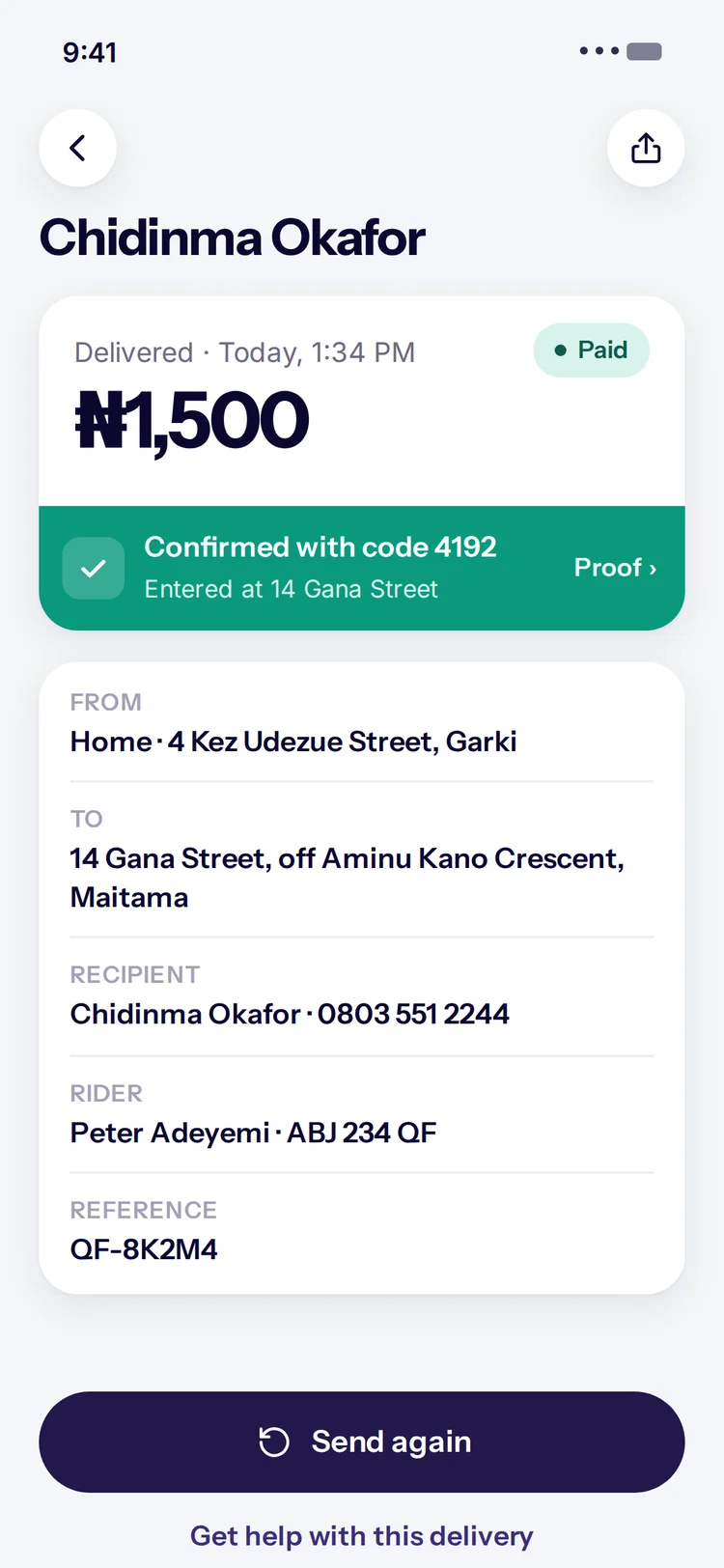
Delivery record screen
07Delivery record

Every step timestamped, so “it never came” has an answer.

Receiver’s page screen
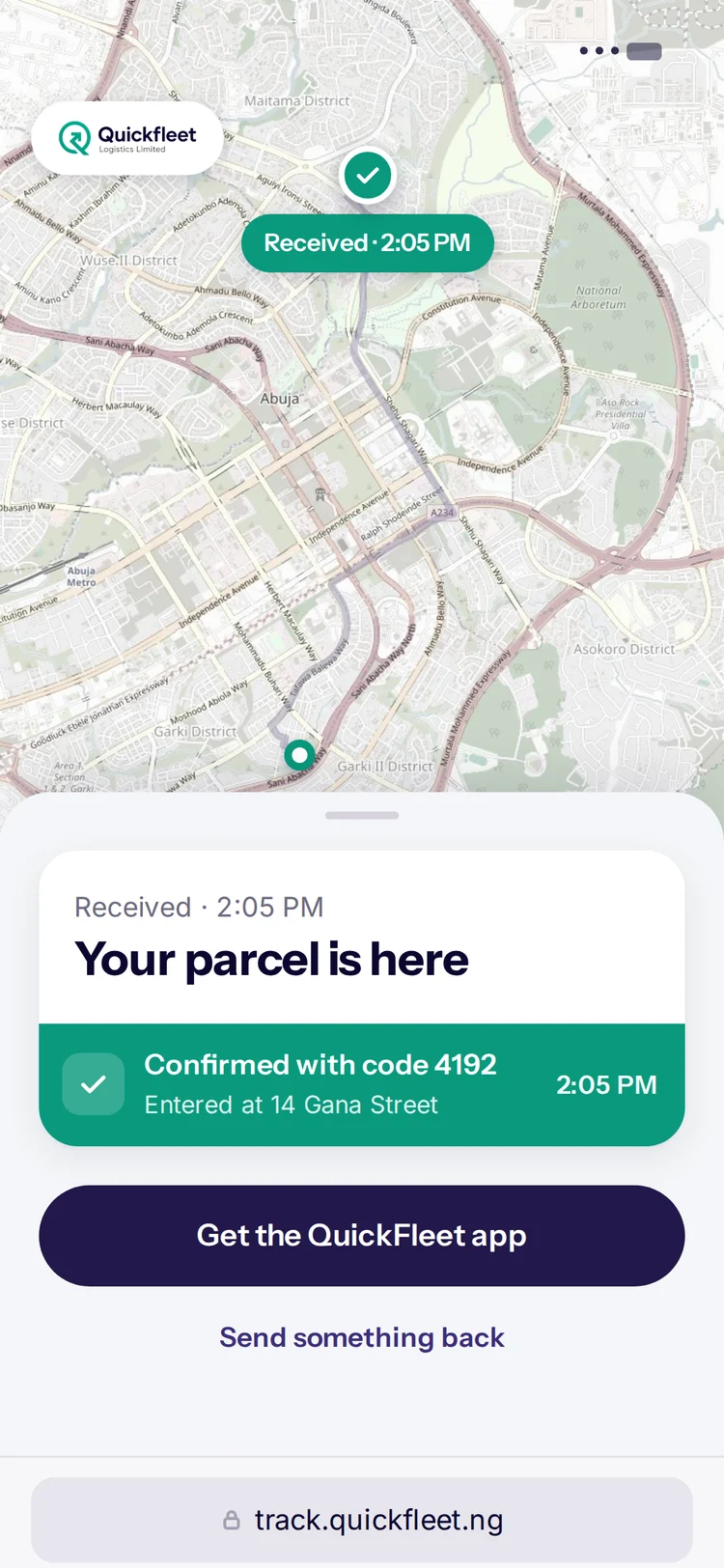
08Receiver’s page

The receiver confirms with a four-digit code from a text link.

No app to install

The website

Live at quickfleet.co

I designed and built the marketing site: the network explained section by section, the brand in motion, and a waitlist that separates customers, businesses and riders from the first click.

Visit quickfleet.co

Designed and built by me, from layout to motion to front end.

Part two

Deep dive: making every delivery provable

What senders and receivers needed, and the three calls that turn a handover into a record.

What we learned

Certainty mattered more than speed

The motorcycle is the easy part. What makes a delivery service worth trusting is everything around it.

Senders & sellers

Price came first

Sellers build delivery into every order. A quote that moves with the pump eats the margin before the parcel leaves.

Senders

Trust is about the rider

Nobody asked for faster. They asked to know who was coming, and that the rider would come straight to them.

Receivers

No app to receive

Anything that asked the receiver to download something would fail at the door.

The insight

Speed is table stakes. The product has to remove uncertainty at three moments: when you book, while the parcel moves, and at the door.

Key decisions & trade-offs

Three calls that make it trustworthy

Decision 01

Make the price a promise the business can keep

The call

Route, distance and price are shown before booking and locked at pickup. The rider has nothing to renegotiate at the gate.

The trade-off

Metered and negotiated fares are the market norm, and exactly what customers distrust. A fixed price only works if costs are stable, which is why this was a business decision before it was a screen: electric energy costs about a quarter of petrol and follows the tariff, not the pump.

Fixed price before booking and the same price after delivery
Before booking · ₦1,500After delivery · ₦1,500

Decision 02

Let the receiver close the delivery

The call

The receiver’s number is part of the booking. They get a text, open a web page and give the rider a four-digit code, and every step is timestamped.

The trade-off

Photos can be staged, and a signature proves nothing to the sender. An app download would fail at the door. A code only the receiver holds settles “it never came” in one line, with nothing to install.

Receiver named at booking and the code confirmed at the door
At booking · receiver namedAt the door · code confirmed

Decision 03

Design the fallback first

The call

Every step has an offline path and a manual fallback at the hub, and the app syncs when it’s back in range.

The trade-off

Designing for fast data and new phones would have made a better demo and a worse service. Starting from the failure case means an outage slows a delivery down instead of losing it.

Before vs. after

What changes for a sender

Informal dispatch today

QuickFleet

Fees move with the pump→Price locked before pickup
Whoever turns up→Riders vetted, trained and employed
Silence until it arrives→A live link for sender and receiver
“It never came”→A code and a timestamp for every step

Reflection

As CTO, every screen was also a business decision.

A fixed price only works if energy costs hold, and a delivery code only works if riders are trained to ask for it. The most useful thing this taught me is to design the product and the operation as one system.